
Materials Research
Chitosan-Alginate Biopolymers: Adhesives, Humidity Control & pH Regulation
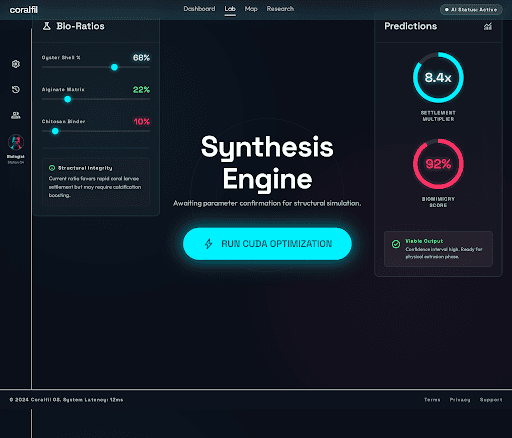
Marine biopolymers offer non-toxic alternatives to synthetic petrochemical resins and harmful desiccants. Coralfil Labs investigates polyelectrolyte complexation (PEC) combining deacetylated crustacean chitin (chitosan) with marine sodium alginate and micronized oyster shell powder to formulate structural adhesives, retail humidity control packs, and precision pH buffering pellets.
Polyelectrolyte Complexation Chemistry
Chitosan is a polycationic biopolymer derived from the alkaline deacetylation of chitin extracted from Dungeness crab and spot prawn processing waste. Sodium alginate, extracted from brown marine macroalgae, is an anionic polyuronic acid. When blended in controlled stoichiometric proportions in dilute acidic solution, the opposite electrostatic charges form strong ionic crosslinks without requiring petrochemical hardeners or formaldehyde derivatives.
Introducing micronized biogenic shell powder (calcite and aragonite) acts as an active mineral filler. Divalent calcium ions (Ca2+) leaching from the shell surface coordinate with the guluronate blocks of the alginate polymer, generating an egg-box ionic network that reinforces mechanical shear strength and moisture absorption capacity.
Consumer & Retail Marine Humidity Control
Moisture accumulation is a persistent threat across coastal environments, causing mold, mildew, structural rot, and electrical corrosion in marine vessels, RVs, and damp coastal properties. Conventional commercial moisture traps rely on calcium chloride flakes that liquefy into caustic brine solutions. When spilled during vessel movement in rough seas, this brine corrodes aluminum hulls, damages teak decking, and harms marine electronics.
Coralfil Labs has engineered a retail-focused bio-desiccant packaging system using crosslinked chitosan-alginate aerogels blended with microporous calcined shell flour:
- Spill-Free Gelation: As moisture is absorbed from ambient air, the chitosan-alginate matrix hydrates into a solid, non-leaking hydrogel rather than a pooling liquid brine.
- Natural Antimicrobial Action: The polycationic amine functional groups of chitosan inhibit airborne mold and fungal spores within enclosed vessel cabins and bilge lockers.
- Target Environments: Specifically packaged for boat cabins, sail lockers, engine compartments, RV storage, damp coastal basements, and seaside gear rooms.
- Circular Lifecycle: Saturated pouches can be safely composted in soil or used as a calcium-rich garden soil amendment, creating zero landfill waste.
Multi-Source pH Regulation & Water Remediation
Fluctuating water acidity stresses delicate aquatic organisms and destabilizes residential and municipal water infrastructure. By granulating micronized shell flour with controlled-porosity alginate binders, the laboratory produces calibrated biomineral pellets and cartridge media for dynamic pH stabilization:
- Freshwater & Reef Aquariums: Maintains stable marine pH between 8.1 and 8.3 while continuously providing bio-available calcium and trace strontium without sudden alkalinity spikes.
- Residential Drinking Water Wells: Neutralizes corrosive, acidic groundwater (pH < 6.5) common in coastal granite formations, protecting household copper plumbing from pinhole leaks.
- Aquaculture Nursery & Retention Ponds: Buffers against seasonal acid rain shocks, sudden organic breakdown flushes, and phytoplankton die-off events in salmonid and bivalve rearing ponds.
- Municipal & Agricultural Reservoirs: Scalable flow-through gabion beds that stabilize runoff acidity and bind excess heavy metal ions via chelation on the chitin surface.
Natural Marine Adhesives & Structural Bio-Epoxies
Conventional marine construction adhesives rely on bisphenol-A based epoxies and polyurethanes that can release toxic volatile compounds and microplastic fragments during hydraulic degradation. Coralfil Labs is optimizing chitosan-alginate-shell formulations to bond substrate modules, setting plates, and cultch bags in intertidal zones.
By tuning mineral filler ratios and incorporating vegetable-derived plasticizers, the laboratory is formulating high-viscosity pastes capable of curing underwater via divalent ion diffusion. Current research focuses on measuring lap shear strength under continuous immersion in high-salinity seawater.
Research Status: ASTM D1002 lap shear immersion testing and saline degradation kinetics in progress.
Protective Biodegradable Barrier Films
When cast as thin aqueous solutions and crosslinked with multivalent cations, chitosan-alginate hydrogels dehydrate into flexible, oxygen-impermeable films. Due to the inherent polycationic amine groups in chitosan, these bio-based films demonstrate intrinsic bacteriostatic properties against marine Vibrio species. Potential applications include sacrificial protective coatings for larval transport containers and short-shelf-life coastal packaging.